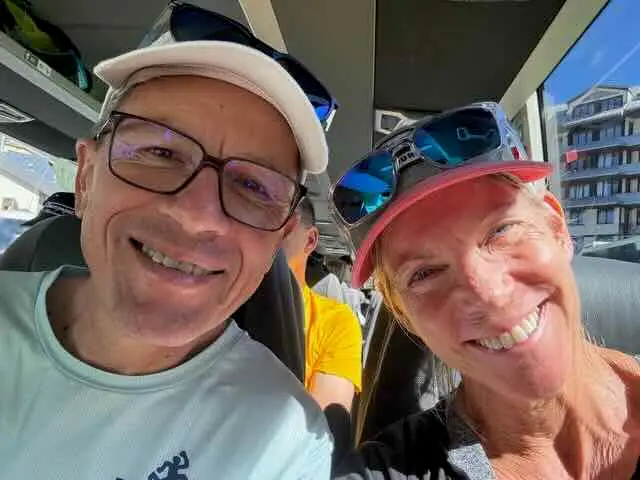
If you were to read about an old woman and her heroic efforts to continue to challenge herself, prove to herself and to others (to a lesser extent) that we can age gracefully, be cool in the shadow of our youth and continue to be inspired, you’d be reading someone else’s race report.
This story is not about heroism and dignity and inspiration. It is about grace, forgiveness and humility – the red-faced, sweaty pitted, dancing queen bridesmaids of inspiration and strength.
When we decided to do the TDS this year, I wasn’t inspired to do it. I wasn’t motivated by any higher purposes. I didn’t even have a chip on my shoulder. Lord knows that I had good material this year: The TDS could have been a sporty middle finger to the U.S Government, which tried to humiliate and fire me. The TDS could have been a loving tribute to our courageous grandson, who demonstrates again and again how superhuman strength can exist in the tiniest of bodies. The TDS could have been a show of solidarity with my friends and family, who have suffered through far heavier personal and professional setbacks than I have this year.
But it was none of that. Or maybe it was all of that. In any case, the TDS was like a recipe that you have made a thousand times and that you continue to fuck up, so that what you have in the end is a shit show layer cake with sweat, tears and dust frosting. Bon appetit!
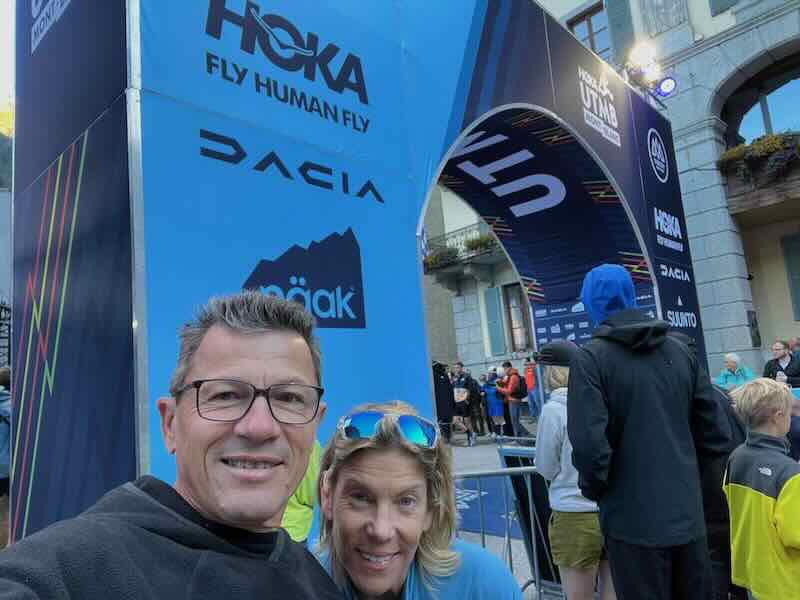
THE TDS – Trail Duc de Savoie (148km, 9,300m elevation gain)
The TDS is known to be the scrappiest of the UTMB race series, one of many trail races of distances from 50km to 300km taking place in and around the exceptionally beautiful Haute Savoie and Aosta Valley regions in France and Italy at the end of August. We were happy to be here, well-trained and ready. Each of us had our race strategy. Eric was looking to make a mark for his biggest race at 60 years old. I was curious to see the results of a very serious training season. (It’s amazing how many hours you can train when you are unemployed!) In the days leading up to the race, we were each of us in our own bubbles, envisioning how we would experience this adventure. But, as in life … things did not go as planned.
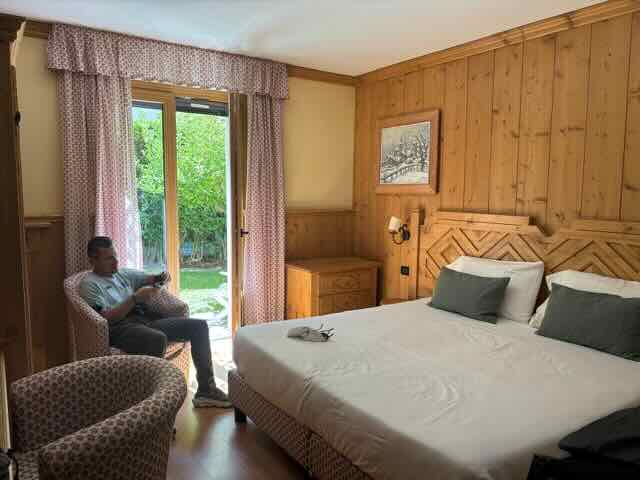
Less than an hour before the start of the race, and just before we headed out to the start line, Eric had to lie down. His head was spinning and his vision was blurry. An allergic reaction? Food poisoning? A stroke? I didn’t know. He laid down, closed his eyes and put his feet up. Should I get a doctor? – No, he said. Well, we are NOT going to run for 2 days in the mountains! I said. Yes, we are, he said… But can I run with you? he asked – Of course, I said. So, 50 minutes before the start of the race, this solitary experience we were both imaging for months (the vision of being alone in your head, the intention to power through, to problem solve alone) became an exercise in solidarity.
It was a sudden shift, but one that I wasn’t conscious of in the moment. My focus was on Eric. This guy, who is so strong, so solid – a rock in all circumstances, was struggling to stand. The energy that I had been channeling to this race – this month, this day, this hour – was now laser-focused on this guy, in this room, in this minute.
He assured me that the malaise had passed, but I didn’t want to take my eyes off of him in case I missed a sign that things were NOT ok – a woozy moment, an unsure step. I was happy that we would run together, because, well, we would be together. Part of me was also a little crushed, because I knew that this was not “the plan” for either of us. The TDS was supposed to be a shining moment for him. To crush it at 60. I wanted it for him almost as much as he did. I also felt self-conscious. I was trained. I was strong. I was ready – but to run “my race”, which is almost always not very elegant, to say the least. I own my old lady status, but rocks are not old ladies… but maybe old ladies are rocks.
Honestly, I didn’t hear the music at the start line. I didn’t hear the motivational speeches. I held his hand and kept glancing over at him, looking for any sign that things weren’t ok. I don’t know how much time passed, but eventually at 23:50, we (along with 2,000 other nutjobs) started on our way, walking, jogging through Courmayeur village, up the road leading out of town, onto a dirt road and finally onto a single track trail, winding slowly up-up-up the first climb to Checrouit and Arete du Mont Favre (12km and 1,283m or positive elevation). I had no worries about either of us going out too hard. We were in a bottleneck of runners for about 6 hours, a caterpillar with a body made of a thousand headlamps and two thousand walking poles for legs.
It was only after the Col Chavannes at 20k and after 1,915m of climbing that we were able to run the downhill and the flats. But we were back in traffic on the climb to Col du Petit Saint Bernard (36km and a total of 2,431m of climbing). The body heat of all those people wasn’t enough to keep us warm after a while, and we broke out our jackets and pulled up our hoods against the cold, cold wind.
We weren’t talking much during the climb, and I noticed that Eric wasn’t eating, or “fueling”, as trail runners like to say. And it really is that. Every hour you need to put something in the tank, or you WILL run out of gas. I was worried, but we were laughing, because for the moment, gas didn’t seem to be Eric’s problem. Clearly, whatever mushroom had poisoned him at dinner was clearly working its way out of his system and into the pure alpine air and into the faces of the runners behind us. Sorry guys!
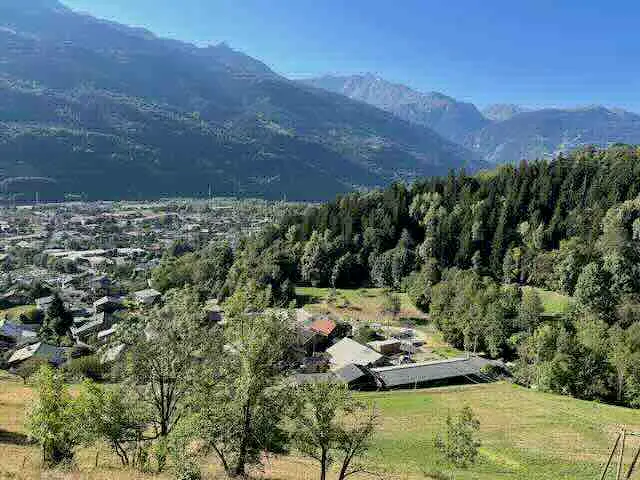
Eric seemed to be doing better, and I was happy to see him eat. I needed a few minutes to settle my stomach before eating, so I put my head down and focused on that. It is just something that I know that I need to do to make sure that the food going in stays in, but it is a big difference between how I deal with aid stations and Eric’s aid station strategy. He is in and out of aid stations like a Formula 1 race car pitstop. Still, he was patient and waited for me. When I was sure that the soup had gone down, we headed off to the first major challenge of the day – the climb to Fort de la Platte and the Passeur de Pralognan, which would bring us to almost 62 km and a total of 4,346m of elevation gain.
Again, the slow and steady strategy might not be the sexiest, but it was efficient. We had to stop a few times to eat a gel or a bar, but nearly everyone who passed us had to do the same. We encouraged everyone who passed us and doubled our encouragement of anyone laid out on the side of the trail. It was hot and this climb seemed to take forever, but by putting one foot in front of the other, we made it to the top.
We were a little frustrated to find ourselves in another bottleneck, this time on the downhill. Mind you, there was good reason. A runner died on this section last year. It is a very steep, rocky section of switchbacks with a steep drop-off on one side. There are chains to hold onto for support and the race organizers have added ropes on the sections without chains, which seems like a good idea, right?… But, in reality, when you have a solid line of people clinging to the side of a mountain and someone, somewhere in front of the line grabs at the rope, it whips taut and slams into everyone behind him on the same section. This quickly becomes a squid game moment, with everyone scrambling to grab the rope before it sweeps them off the precipice!
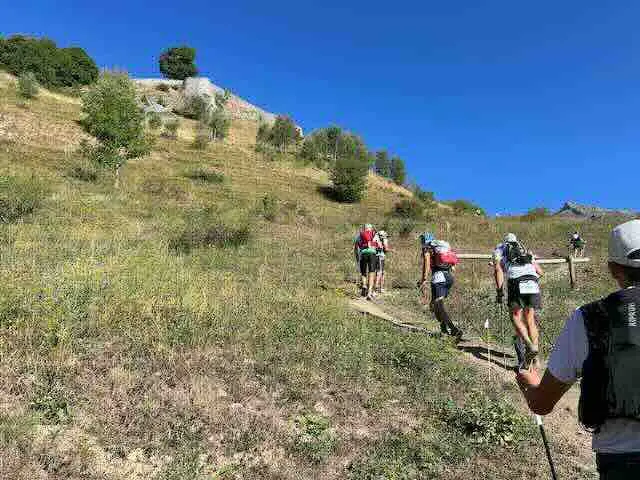
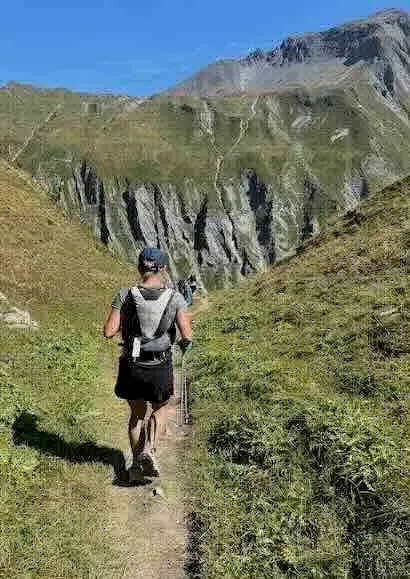
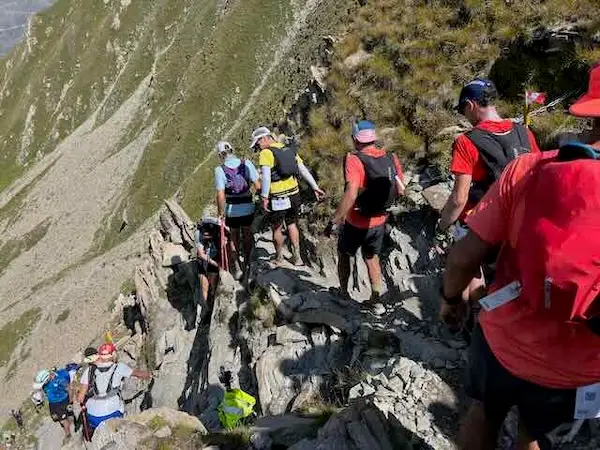
It’s a good thing that Eric, in addition to being part rock, is also part mountain goat. He has exceptional reflexes and a spatial intelligence that always amazes me. I followed his lead as we skirted around other runners on the breathtaking outside edge of the pass until we were able to run again.
I was excited to get to Cormet de Roseland (70km and 4,389m of elevation gain), because I had got it into my head that we could have a hot meal there. Much to my disappointment, there was just the same broth and pasta that we had been downing since the beginning. I took a cup of soup and stood in front of the tables for a long time, wanting desperately to eat something else, something that I wanted to eat. I forced myself to eat a banana, a piece of salami and I tried a piece of the energy bars that they had laid out (not good). As we headed out to the next aid station, just 3km away, I knew that what I had eaten didn’t go down well. The food stayed lodged somewhere between my throat and my chest as we trotted down to La Gittaz.
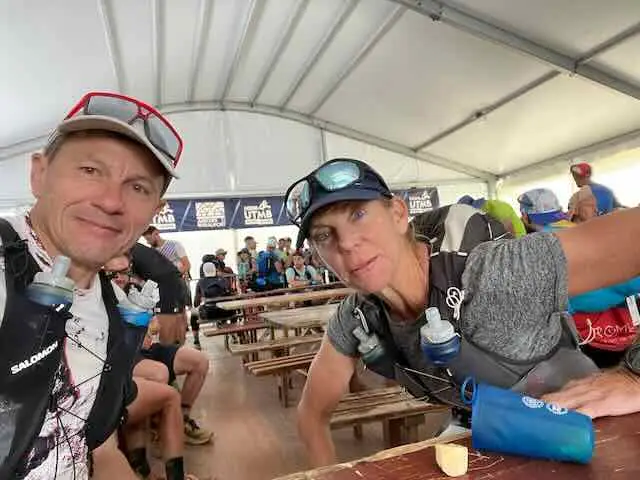
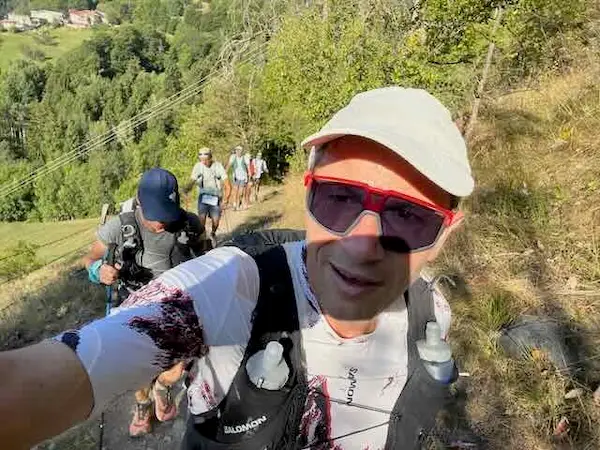
At La Gittaz, I stared at the same cookies, bars, soup, and salami that we had been eating for the last 16 hours, and I knew that I was going to have problems getting any of that down. I probably shouldn’t have tried, but I didn’t know how I would make the 20km to Beaufort if I didn’t eat. So, down went the soup. Down went the banana. But I felt it all get blocked by the internal bottleneck that was building since Cormet de Roseland. I told Eric that I needed to sit and wait for all of that food to go down. I sat in the grass with my head down, while Eric talked to Yann, who was nice enough to come and cheer us on at La Gittaz.
I know what that rumbling in my belly means. Instead of going down, the food came up. And up. And up. And up. It wasn’t pretty, but at least my stomach felt better (and maybe the groundhogs would have something to eat later…). I had been in this situation many times before. I know what to do. Rest a bit. Walk slowly. Wait for the system to reset. Try to restart in 15 minutes. But I didn’t do that. Eric was feeling better, and I wanted to keep whatever momentum we had left. And so we headed out of the aid station.
Eric let me lead, and I tried to keep a pace so that we would not lose any more time. Yann walked along side, encouraging us: “You’re moving really well. Unbelievable!” But after a few kilometers, I started to feel the fuel gauge going down with every step until I was running on fumes. I told Eric that I wasn’t sure what state I would be in by the time we got to Beaufort (94km). I was afraid that I would burn out the motor if I tried to make it with no food in my system. He let me know that he wasn’t feeling confident about the kilometers and major climbs ahead either. We stood facing each other for what seemed like a long time. What do you want to do? I asked.
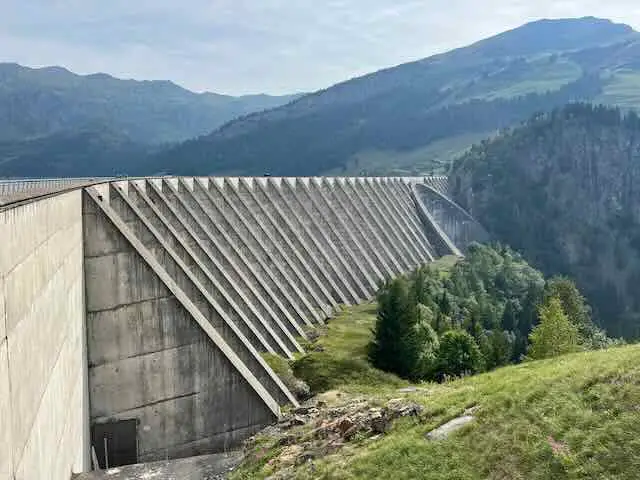
We sat down on a rock and talked about everything that we had done already. What we wanted from this experience and what we didn’t want. What we wanted was to continue to enjoy our time in this beautiful region together. And for us that meant stepping out of the race.
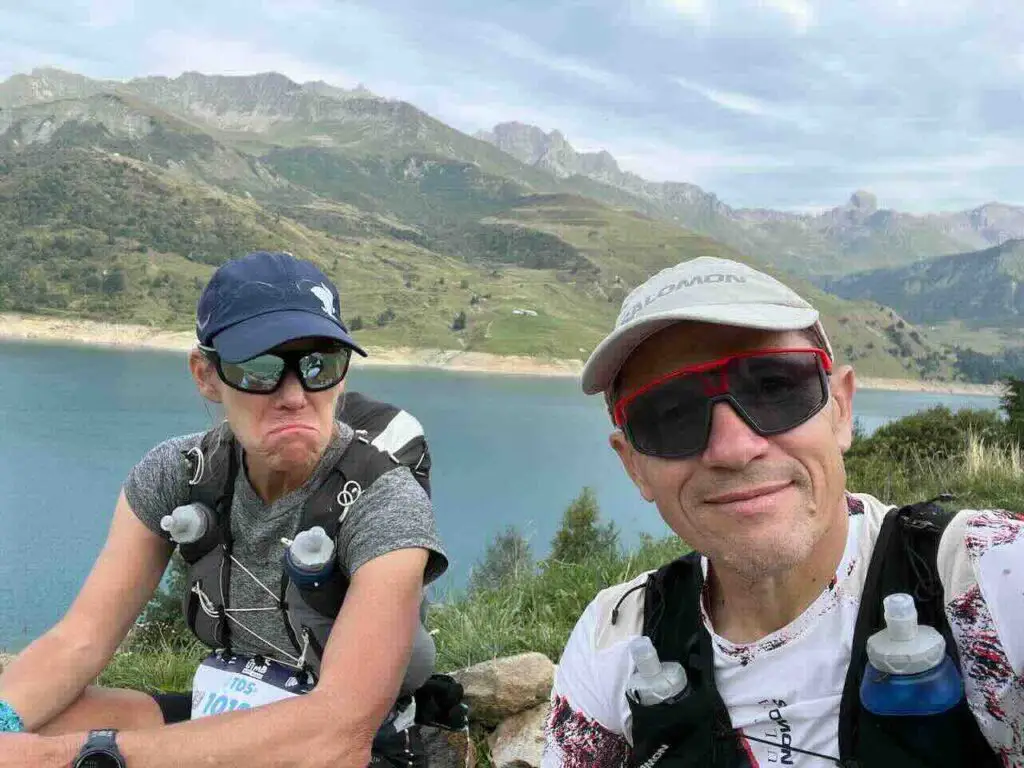
Were we happy with our decision to call it quits? No. Not at all. No. Were we a little happy to be sitting quietly together overlooking the pristine jade waters of the barrage de Roselend in the shade of majestic mountains?
Yes. Yes we were.
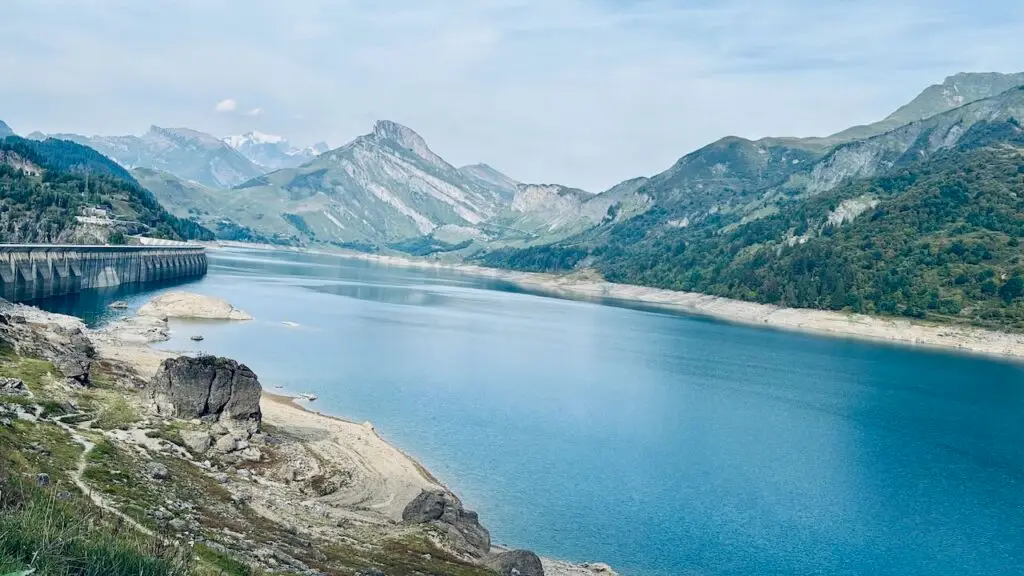
PS -- Never give up what ?
After our TDS adventure, we had so many nice messages of love and support from friends and family. There were a lot of messages of support for all of the runners taking on races during UTMB week. It was a touching show of solidarity and community that is such a big part of the sport of trail running.
One of the messages was a simple one that has become a kind of mantra: “Never give up.” The day after we decided to drop out of the TDS, this message hit me like a slap in the face – I gave up. I wasn’t mentally strong enough. I didn’t have confidence in myself. I did something wrong. I was weak.
You can see (and maybe you have already experienced) how the self-criticism spirals.
That is why I think that we need to put that mantra: “Never give up” and put our sport, into context – the context of our larger lives. Our lives that are richer not only for our successes, but more importantly for our failures.
This life of our contains hundreds of “give ups”. We “give up” time to help friends and family. We “give up” money to help those in need. Sometimes, we “give up” our jobs to maintain our integrity. These give ups have nothing to do with failure or weakness and everything to do with engagement and doing good, our engagement to each other, to our healthy lives and joyful experiences on and off the trails.
We are privileged to have the time, the means and the physical ability to run long distances in beautiful environments in solidarity with a diverse community of people who share this passion. And the way that I see that we can be worthy of this privilege is to use it to do good, to contribute to something good. It is a way of thinking that has helped me stay optimistic and engaged.
But to stay optimistic and engaged for what? To stay optimistic and engaged in the sport, sure. But this optimism and engagement is what I try to bring to all of the other aspects of my life, a life. And I have the added benefit of living this engagement and optimism with my husband and occasionally running races with him. To live together the optimism and engagement that comes with trail running is a good part of our lives and one that we try to share with others. And while it is a good part of our lives, it is a relatively small part of our lives.
In the end, the trails that we run are just paths that cross through our lives, leading us sometimes to a finish line, and leading us always to each other.